Deep Dive: Amrize
Why the Holcim spin-off offers attractive prospects
Published onReading time 27 minutes
At the end of January 2024, the Swiss cement and building materials group Holcim announced that it would spin off its US business under the name Amrize and float it on the stock exchange in mid-2025 as a completely independent company. At the slowly growing parent company Holcim, which will in future comprise the business in Europe, Latin America, the Middle East, Africa and Asia, everything will in future revolve around the circular economy, sustainable and climate-friendly construction following the EU's Green Deal. The US spin-off will create a leading provider of construction solutions in the region, which will grow faster than the parent company owing to structural infrastructure spending by the public sector, the relocation of supply chains and the favourable regulatory framework. The market underestimates the ambitions of Amrize, now released into independence.
Amrize will be traded on the stock exchange for the first time on 23 June 2025 – simultaneously on the SIX in Zurich and the NYSE in New York. Existing Holcim shareholders will receive one Amrize share for each Holcim share held. The decisive factor is the holding as at 20 June 2025. The allocation of the Amrize shares takes the form of a «Dividend in Kind», i.e. a dividend in kind, and is tax-neutral in Switzerland and tax-free in the USA.
Holcim's growth path: from acquisitions to structural reorganisation
The manner of this restructuring (in particular the regional split) seems somewhat unusual at first glance. Yet, based on Holcim's history and the new strategic direction under the leadership of Jan Jensich, the spin-off of Amrize appears to be a logical step. Management and the Board are convinced that the spin-off will create two independent, listed companies that can each concentrate on their respective business, and that this will lead to improved long-term performance for both companies.
Holcim, founded in Switzerland in 1912, began its global expansion with investments in cement companies in Europe and Africa in the 1920s. In the 1950s and 1960s further steps followed into the western hemisphere, with sites in the USA, Canada and Brazil. Expansion was driven forward in Latin America, before turning to Eastern Europe and Asia in the 1980s and 1990s. The merger between Holcim and the French company Lafarge in 2015, then the largest cement producer in the world, marked a turning point. Both companies were not well managed, and the merged LafargeHolcim Group appeared geographically over-diversified.
The turnaround came with the appointment of Jan Jenisch as CEO in 2017 and the then Chief Financial Officer Géraldine Picaud in 2018. Through a comprehensive reorganisation, debt reduction and the sale of business units in emerging markets, the company was radically restructured. Holcim had always used acquisitions as part of its growth strategy in the past, but it was only under the leadership of Jan Jenisch that the deals were very good. During Jenisch's tenure, Holcim pursued a decentralised culture geared towards the business units and made over 100 carefully selected acquisitions since 2018. In 2021, the 3.4 billion dollar acquisition of Firestone Building Products (from Bridgestone Americas) created a fourth pillar named «Building Solutions», alongside the cement, ready-mix concrete and aggregates divisions. The roofing systems business offers flat roof systems, but also produces and sells individual components such as moisture barriers and insulation. In the same year, the name «Lafarge» was dropped.
Amrize: the powerhouse of the North American building materials industry
Under Jan Jenisch, Holcim was managed in a strongly decentralised manner, i.e. responsibility for the respective business units was delegated to regional management. Jan Jenisch has built up an outstanding management structure in recent years. Milan Gutovic, the previous CEO of Holcim, will continue to lead the remaining business as CEO, while Jan Jenisch will move to Amrize as CEO and Chairman of the Board. Ian Johnston will serve as Chief Financial Officer at Amrize, a role he has held for Holcim's North American business since 2018.
In recent years, the general conditions in the USA have changed considerably once again as a result of the Biden administration's infrastructure programmes and the government's ambitions to reindustrialise, which contributed to the decision to spin off the North American business under the name Amrize. In 2024, the company generated revenue of around 11.7 billion US dollars, employed over 19,000 people and operated at more than 1,000 sites across the USA and Canada. The company is the largest cement producer in the region and in the USA, as well as the market leader in modern roofing and facade systems.
Amrize's business model is geographically focused and strongly decentralised in its organisation. It serves the entire construction life cycle «from foundation to roof» with a broad product portfolio comprising cement, aggregates, ready-mix concrete and building technology solutions. The customer base is diversified and ranges from public and industrial clients through to residential developers. In 2024, 56% of revenue came from new construction and 44% from repair and refurbishment projects («Repair & Refurbishment»). This balanced split, in particular the high share of renovation projects, helps to make Amrize's business model less cyclical than is generally assumed and reduces its dependence on large-volume infrastructure programmes. Amrize serves all three key end markets: commercial construction (49%), the infrastructure sector (28%) and residential construction (23%).
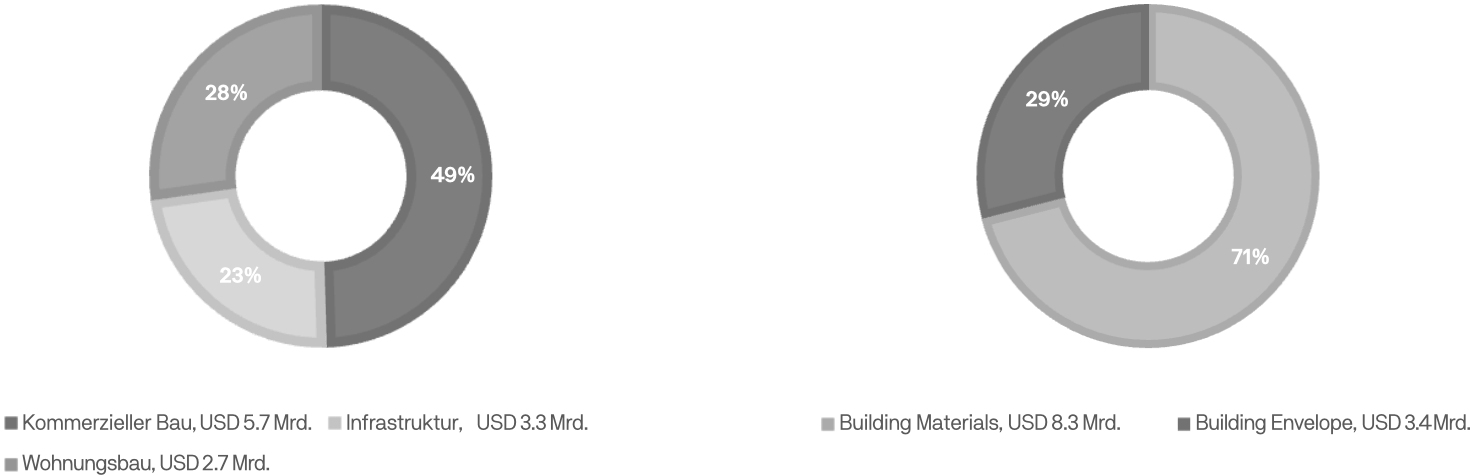
Amrize structures its business activities into two main segments:
- Building Materials: This segment, which can be regarded as the industrial backbone of the company, comprises cement, aggregates, ready-mix concrete, asphalt and other building materials. In 2024, it generated revenue of around 8.3 billion US dollars, corresponding to a 71% share of total revenue. The «Building Materials» division addresses a market with an estimated volume of around 140 billion US dollars. Revenues within this segment are split almost evenly between the cement and aggregates segments.
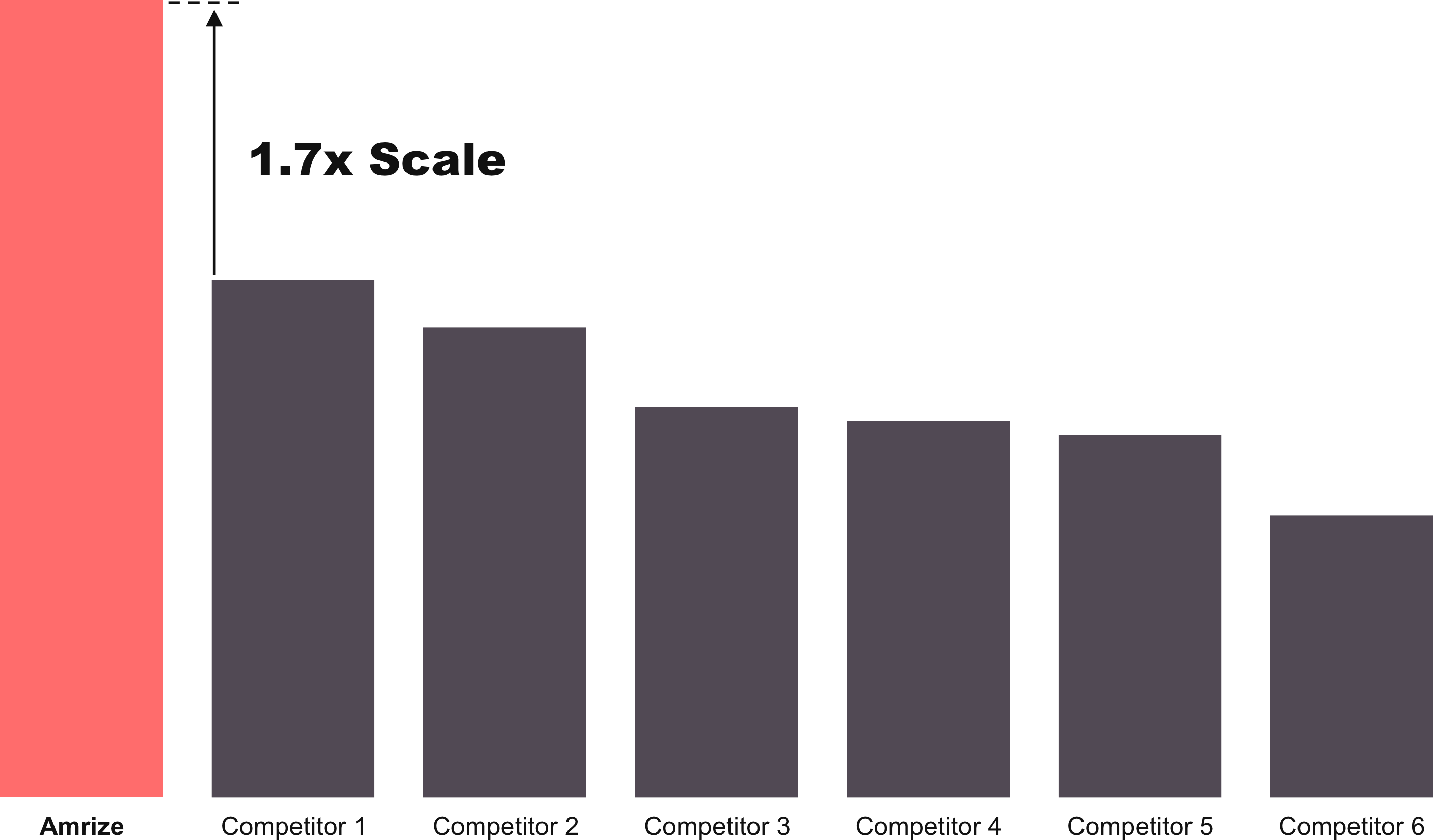
Cement: Amrize holds a leading position as a cement producer in the USA and has a production capacity that is around 1.7 times as high as that of its next largest competitor (see chart below).
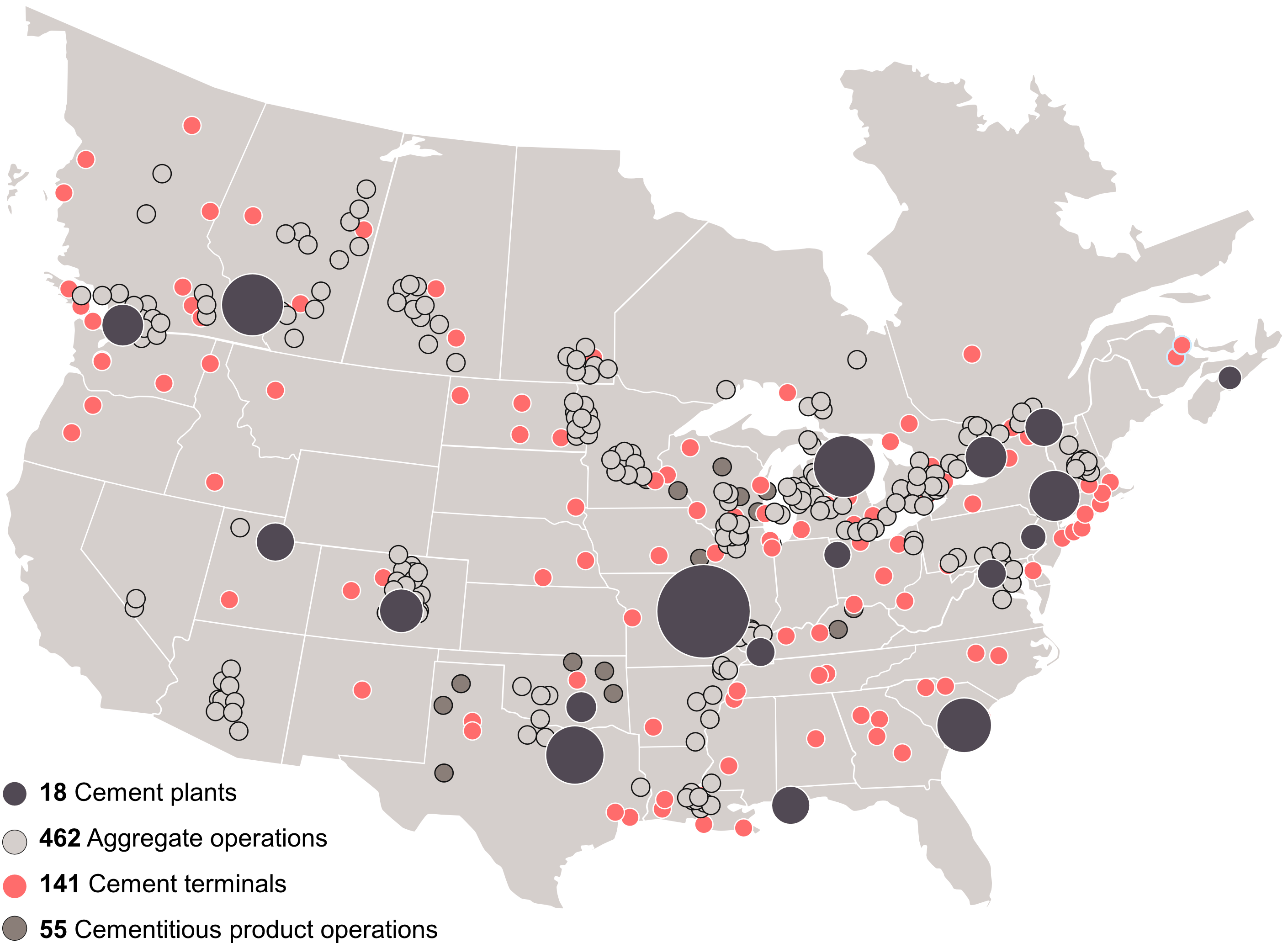
Owing to the regional structure of the industry – caused by transport costs that are high relative to the product value – the building materials industry operates predominantly in smaller, distinct markets that can differ considerably. With 18 cement plants, 141 cement terminals and 55 operations for cementitious products, Amrize possesses a highly efficient and comprehensive logistics network (water and rail transport network) that provides the necessary flexibility and security of supply to stay close to the customer (see overview below). The company has extensive mineral reserves, including cement reserves for around 71 years and secured reserves in the aggregates business for 46 years.
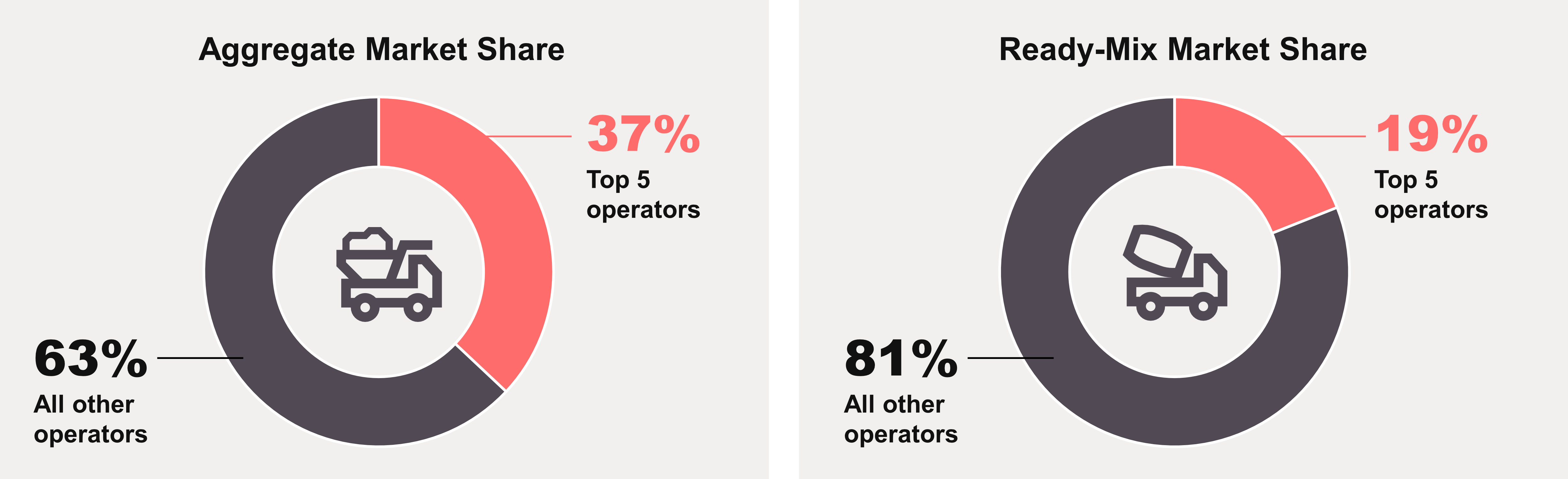
Aggregates: With 462 aggregates operations and 269 ready-mix concrete plants, Amrize is number 1 or 2 in 85% of the markets it serves. The aggregates business is characterised by remarkable pricing power. Although these materials are indispensable for construction projects, they represent only a small share of total costs (e.g. 10% for roads and 2% for houses). Prices for aggregates in the USA experienced an annual increase of 4.7% over the past 50 years. Even during economic downturns, there was no decline in prices. The two markets, aggregates and ready-mix concrete, remain highly fragmented, as the top 5 players account for a market share of only 37% and 19% respectively (see chart below).
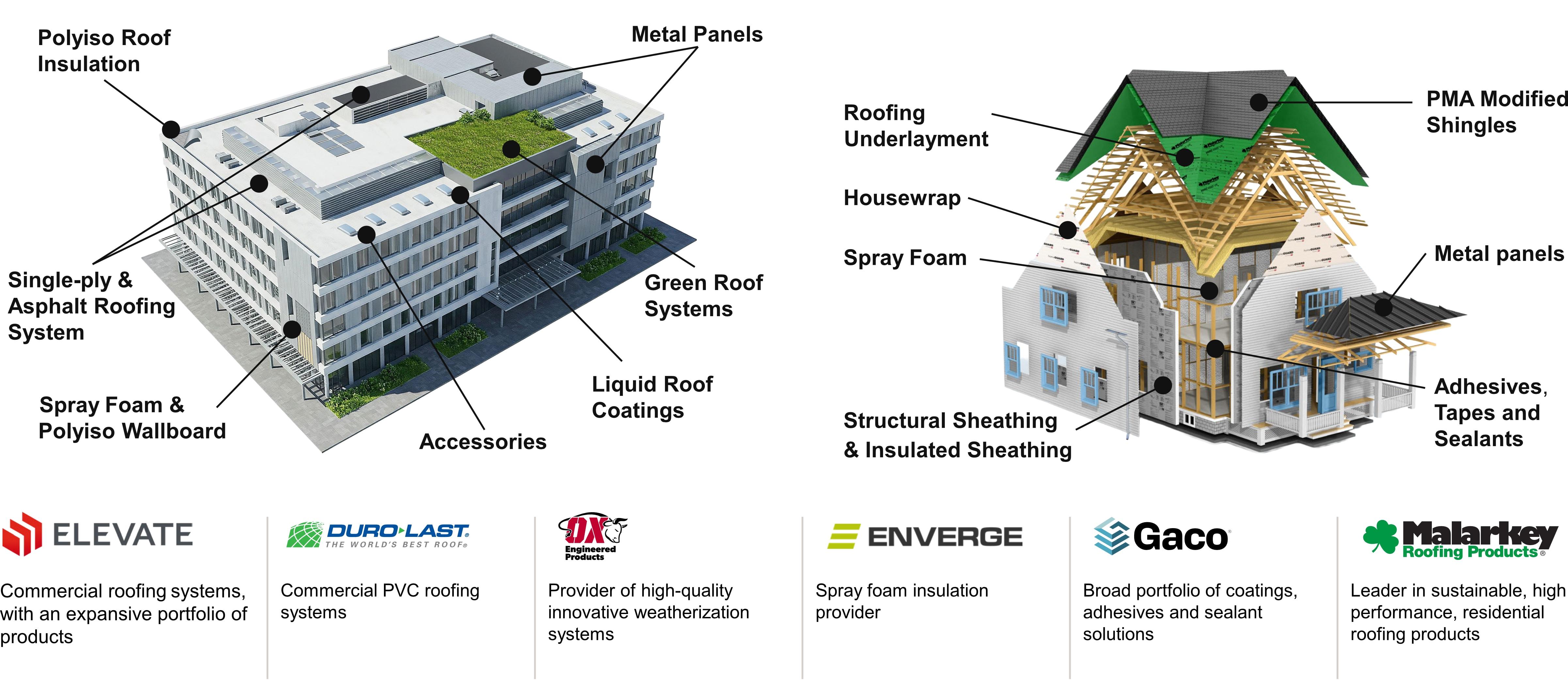
- Building Envelope: This segment comprises modern roofing and wall systems for commercial and residential buildings. The portfolio includes single-ply membranes, insulation, shingles, coverings, protective coatings, adhesives, tapes and sealants (see list below). Segment revenue amounted to 3.4 billion US dollars in 2024, corresponding to a 29% share of total revenue. In this area, brands such as Firestone Building Products, Duro-Last and Malarkey Roofing Products are market leaders. Distribution takes place directly to specialist contractors or via partner networks.
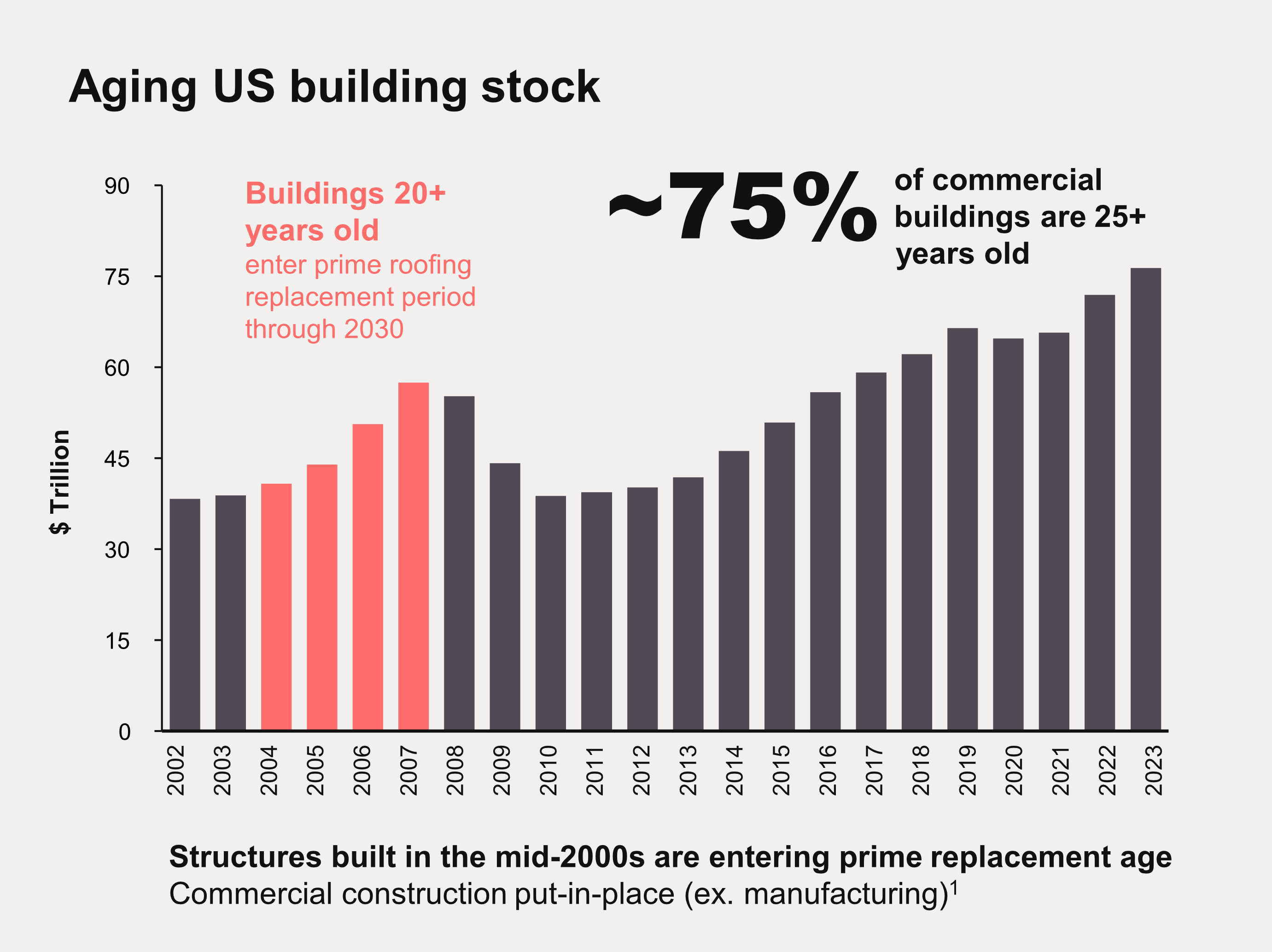
This segment was built up from zero to a 3.4 billion dollar business in just 4 years, beginning with Firestone Building Products in 2021. Management points to a total capital outlay (organic and inorganic) of 200 million US dollars for this 770 million US dollar EBITDA segment. In total, 7 acquisitions have been made since April 2021 and, given an addressable market volume of around 60 billion US dollars, this business segment too offers further consolidation potential. This thesis is supported by the ageing of commercial buildings (75% are over 25 years old, see chart), spending on repairs and conversions in residential construction, and the demand for greater energy efficiency and more functional roofs (e.g. solar, eco and cool roofs).
The two segments Building Solutions and Building Envelope are vertically integrated and operationally strongly decentralised, which enables proximity to customers and projects. Amrize therefore operates primarily on a regional basis, as building regulations, market cycles and pricing mechanisms differ considerably between the US states. This underlines the relevance of locally anchored management.
Positive growth prospects in the North American market
This strong anchoring in the market gives rise to concrete opportunities: Amrize is well positioned to benefit from several structural growth drivers that shape the construction sector in North America.
The most important growth drivers include:
- Infrastructure programmes in North America: North America is one of the world's most dynamic construction markets. Every year, over two trillion US dollars are invested in infrastructure, commercial and residential construction projects. An important growth impulse is provided by the American Infrastructure Investment and Jobs Act (IIJA), which envisages investments totalling 550 billion US dollars for new infrastructure projects in the period from 2022 to 2026. Although implementation has been rather sluggish so far, and around a third of the funds has been drawn down to date, an extension of the programme until at least 2028 is generally expected. Amrize is strongly anchored in North America and well positioned to benefit from these government investments. The company has already secured over 150 projects through to 2026, which points to a solid project pipeline and persistently high order intake.
- Residential construction and urbanisation: The North American housing market is characterised by a structural investment backlog. Despite recently declining construction activity, a marked revival is expected from mid-2025, supported by demographic growth and increasing urbanisation.
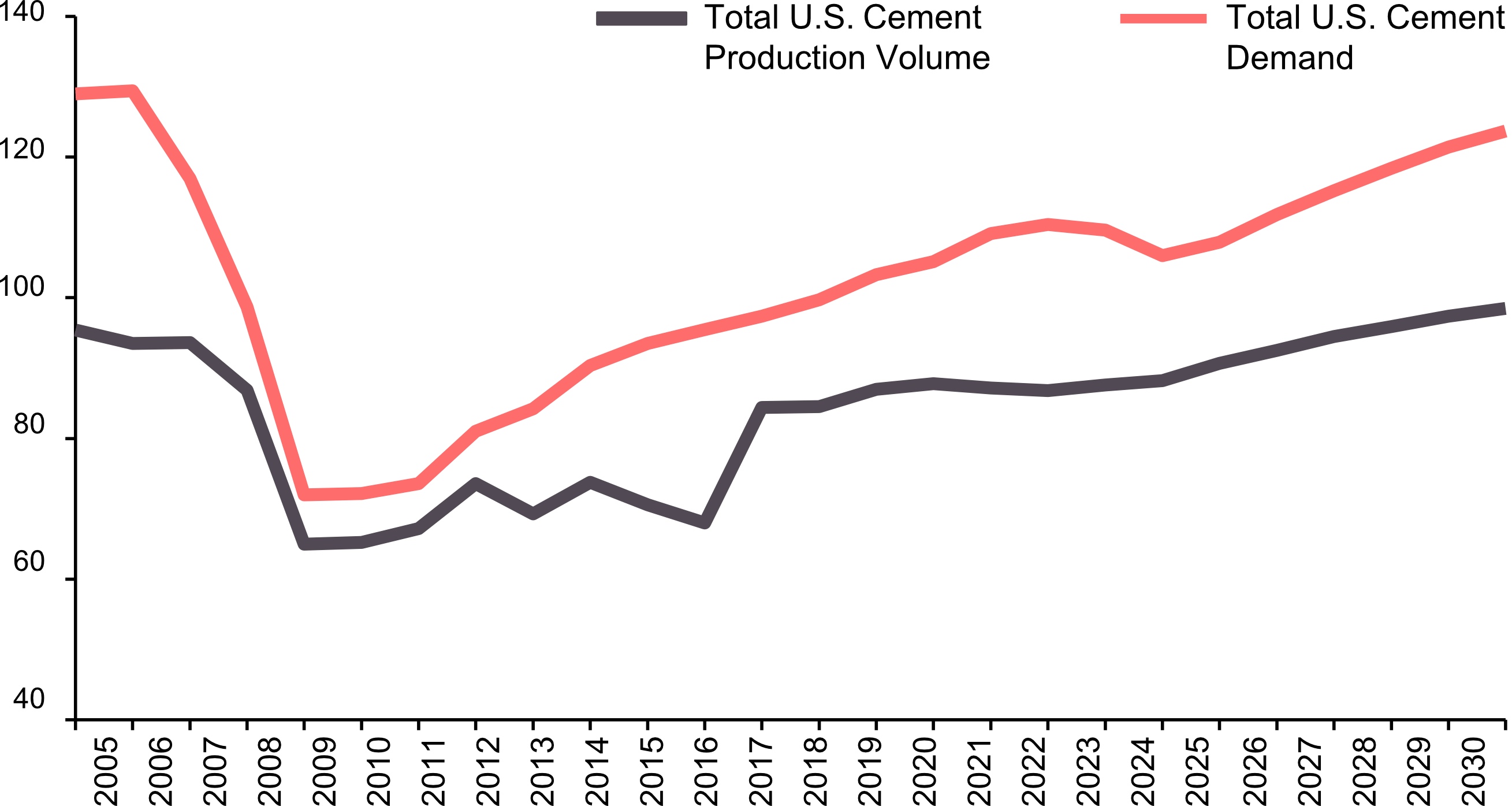
- Structural scarcity as a competitive advantage: The supply-demand dynamics in the North American construction market are characterised by structural bottlenecks (see chart below). Strict regulations hinder the expansion of new production capacity, while demand grows continuously. This creates an attractive market environment with stable price increases. Thanks to its leading market position in the cement business, extensive raw material reserves and efficient logistics, Amrize is excellently positioned to benefit from this scarcity and the resulting pricing power.
- Industrial reshoring as a demand impulse: The increasing relocation of production capacity to North America, particularly in areas such as semiconductor and battery manufacturing, is leading to greater investment in industrial infrastructure. This raises the need for high-quality building materials and accompanying services, from which Amrize benefits directly.
- Acquisition strategy: Since 2018, Amrize has successfully completed 35 acquisitions and continues to pursue a disciplined «bolt-on» strategy that focuses on value-enhancing and synergistic add-ons. The heavily regulated cement segment, with strict approvals and restricted access to raw materials, further increases the need for consolidation. Smaller providers are under pressure due to growing regulatory requirements and the increasing importance of efficient logistics structures, and are increasingly seeking strategic partnerships. As explained earlier, the fragmented markets certainly still offer inorganic growth opportunities.
Over the past six years, Amrize has generated revenue of around 3.8 billion US dollars through acquisitions, which corresponds to about a third of current revenue. More than 60 per cent of free cash flow was reinvested in M&A activities. The designated CEO Jan Jenisch brings extensive experience in the successful implementation of consolidation strategies, with capital allocation centrally managed while local management is responsible for integration and synergies. The transactions to date were carried out at an EBITDA multiple of around 12, or around 8 on an adjusted basis including synergies, and have increased enterprise value. Management emphasises that mergers and acquisitions will continue to play a central role in Amrize's growth strategy in future.
Reasons for the Holcim spin-off
The geographical over-diversification at Holcim has now been largely eliminated. In addition, a number of financial targets for 2025 were already achieved in 2023, two years earlier than planned. So why is the split taking place now?
The reasons for spin-offs are, as a rule, valuation-related or strategic in nature. Holcim assumes that large US investment funds are seeking a focused, US dollar-denominated platform in order to participate in the country's growing infrastructure investments. This growth is being driven by funds from the Infrastructure Investment and Jobs Act (also known as the Bipartisan Infrastructure Law) and the Inflation Reduction Act. Additional impetus is expected from the relocation of production and efforts to combat the persistent housing shortage. In light of these developments, Holcim forecasts that the revenue of its North American activities could grow from 11 billion US dollars in 2023 to 20 billion US dollars in 2030.
«Pre-spin» valuation based on the sum of the parts
The US market rewards companies that benefit from these structural trends with elevated valuation multiples. When valuing Amrize as a stand-alone company, investors should take a differentiated view of the exposure to the respective end markets. According to Holcim's spin-off presentation, the North American business will be relatively evenly distributed across two segments: cement, aggregates and ready-mix concrete («Building Materials») as well as roofing and wall systems («Building Envelope»). Although none of the companies listed in the table below is directly comparable with Amrize, some firms show parallels. Vulcan Materials, for example, focuses mainly on aggregates and is therefore only a partial fit. Martin Marietta Materials offers a broader product range – including aggregates, cement, ready-mix concrete and asphalt – and thus overlaps more strongly with Holcim's traditional portfolio. Eagle Materials, by contrast, generates around half of its revenue from gypsum wallboard, which limits its relevance as a comparator. Carlisle, on the other hand, is better suited as a comparator for the «Solutions & Products» segment.
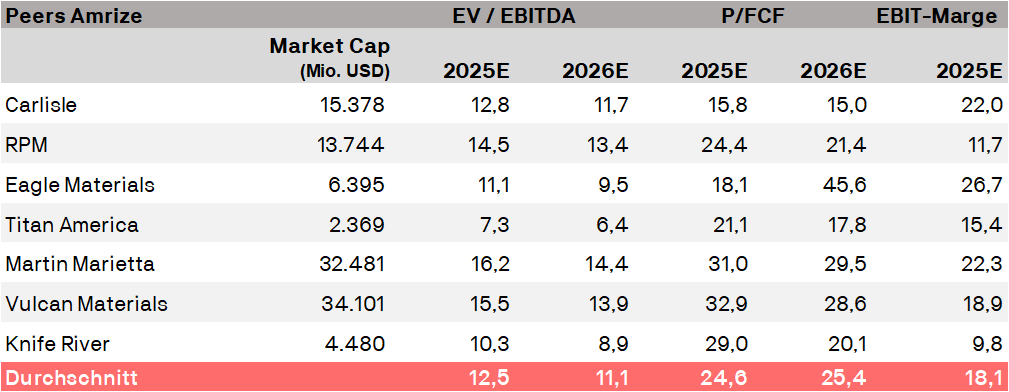
In the Building Materials area, it should be noted that cement producers such as Eagle Materials have historically traded at a discount to aggregates providers such as Martin Marietta Materials and Vulcan Materials. Reasons for this include, among others, higher cyclicality, greater operating leverage and the greater potential competition from imports.
Holcim assumes that a US listing of its North American business could achieve valuations similar to those of the US peer group, particularly as inclusion in the S&P 500 Index is expected in the medium term, which would boost investor demand.
After the spin-off, on the other hand, Holcim is likely to trade more in line with internationally oriented competitors, such as Buzzi, Heidelberg Cement or Saint-Gobain. These companies currently have an average EV/EBITDA multiple for 2026 of around 7.0x. It should also be noted that Holcim, in its previous consolidated structure, traded on average at a forward multiple of between 7.0x and 8.0x over the past 1-, 3-, 5- and 10-year periods.
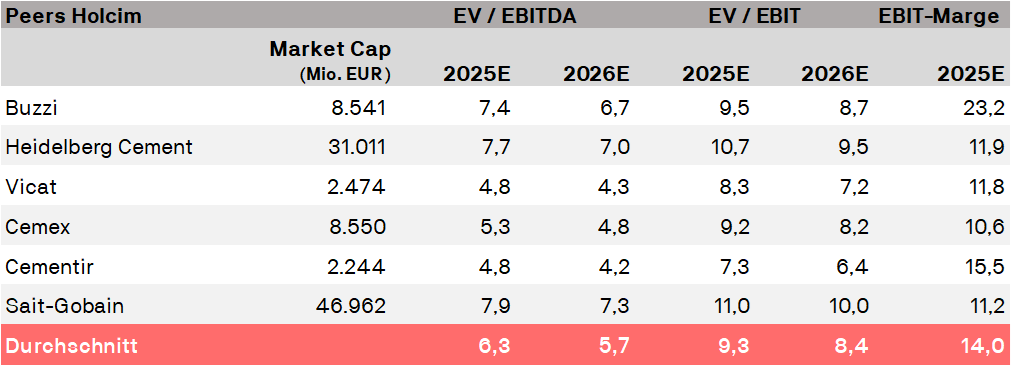
There is no apparent reason why the remaining Holcim business without North America should trade at a lower valuation multiple than it does today. At 17.2%, EBIT margins are ahead of most competitors. Holcim remains a leading player in its industry, has moderate growth prospects and, following the spin-off of Amrize, forecasts an increase in operating profit of 50% by 2030.
Assuming a conservative multiple of 7.0x on the consensus-expected 2026E EBITDA of CHF 4.44 billion results in a segment value of Holcim «post-spin» of around CHF 31 billion.
For Amrize, it makes sense to apply a blended valuation multiple to expected EBITDA for 2026:
- 13.5x for the aggregates business (slightly below Vulcan Materials and Martin Marietta),
- 9.5x for the cement business (corresponding to the level of Eagle Materials)
- 11x for the roofing business (slightly below Carlisle).
In total, this results for Amrize in an estimated cumulative segment value of around CHF 36 billion. On a sum-of-the-parts basis, after deducting net debt, this gives a fair value of CHF 58.75 billion or around CHF 106 per share.
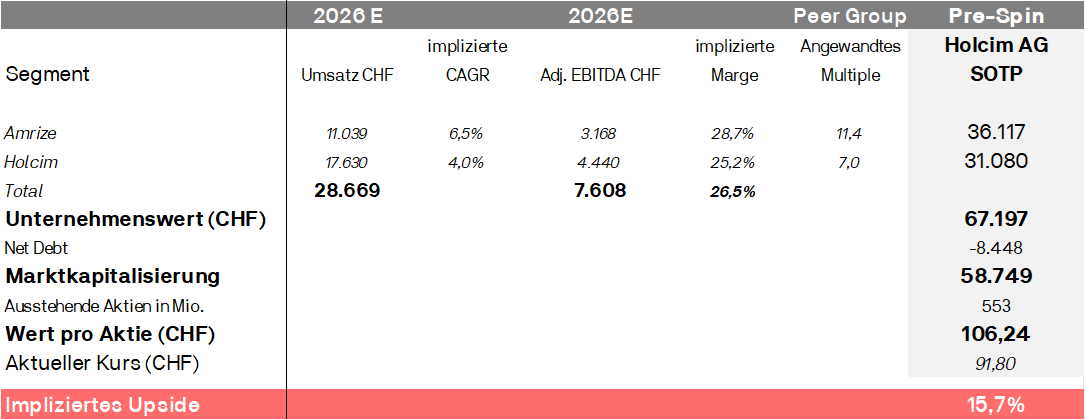
The Keynote Spin-Off Fund established a «pre-spin» position in Holcim as early as February 2024, since the share was trading at a valuation discount to its peer group and it could be assumed that this discount would already narrow ahead of the spin-off.
Indeed, Mr. Market has received the separation plans positively, with the share rising around 40% from about CHF 65 to over CHF 90. We continue to assume that the forthcoming transaction will unlock value, as the shares of both companies will achieve appropriate valuations on their respective stock markets and, particularly in the case of Amrize, value-enhancing factors will move to the fore from a medium- to long-term perspective.
Can Amrize flourish outside the parent company?
The «sum-of-the-parts» valuation can be unlocked by separating the two business units and valuing them appropriately on their respective stock markets. Yet, while the short-term success of spin-offs has much to do with the disappearance of the «conglomerate discount», for medium- to long-term success it is far more decisive that management and the Board take into account the following two considerations:
- Are two or more business units optimally managed within the parent company?
- Would the business be optimised over the long term inside or outside the parent group?
The spin-off of Amrize was partly criticised as «financial engineering», but management asked precisely the strategic questions listed above and came to the conclusion that the spin-off is in the best interests of the parent company and its shareholders.
Amrize is strategically excellently positioned to benefit from the solid fundamentals of the North American construction market.
Value vs. Growth
When a company consists of two or more business units, it is not only likely that a «valuation discount» exists, but also that individual business units do not come into their own. In many spin-off situations, there is a high-growth business and a business with no or slower growth. In many cases, one of the companies is a cash cow that helps finance investments or mergers and acquisitions of the faster-growing, more dynamic company.
In the case of Holcim and Amrize, this is not the case, as the table below shows. Rather, there is a growth area (Amrize) and a value segment (Holcim). But the high-growth spin-off Amrize already has higher margins than the parent company and possesses even greater margin potential.
Differences between Holcim and Amrize
Holcim | Amrize | |
|---|---|---|
Geographical focus | Europe, Asia, Middle East & Africa, Latin America, | North America |
Market dynamics | Lack of volume growth in Europe, price increases | Volume growth and price increases |
Capital allocation | CAPEX, dividends, mergers & acquisitions | Reinvestments, bolt-on acquisitions, dividends, share buybacks |
EBIT margin 2024 | 17.4% | 18.8% |
Top-line growth targets by 2030 | 3-5% p.a. | 8-10% p.a. |
EBIT growth by 2030 | 6-10% p.a. | 14-16% p.a. |
Balance sheet leverage | 1.1x / Investment Grade | <1.5x / Investment Grade |
Shareholder base | Europe / CH, Value / Income | US / CH, GARP / Growth |
Exposure to currency volatility | medium to high | low |
Source: company data, Keynote
Volume growth is lower in the European markets than in North America. In Europe, the declining volumes were offset by price increases, and it can be assumed that prices will continue to rise as a result of CO2 costs. CO2 emissions are also an issue in America, but less pressing. Following the EU's Green Deal, everything at Holcim will in future revolve around the circular economy as well as sustainable and climate-friendly construction. The favourable supply and demand dynamics in North America and the limited availability of natural resources will not only drive long-term price growth at Amrize. The ageing infrastructure, current onshoring trends and historical underinvestment in residential construction offer room for future volume growth.
For better comparability, the table did not list Amrize's medium-term targets (2024 to 2028), but rather the targets for 2030 stated in 2024. Holcim has secured over 150 infrastructure projects in North America for the coming years and estimates that net revenue could increase from 11.7 to 20 billion US dollars by 2030, or by 9% per year. Over the same period, an increase in EBIT margins from 18.8% to around 25% is expected, corresponding to forecast EBIT growth of around 15% per year. For the rest of Holcim, solid but less strong growth is expected after the spin-off of the North American business. Net revenue and EBIT are expected to grow by 3-5% and 6-10% per year respectively.
By the end of the decade, Holcim is thus aiming for EBIT growth in North America of around 130% compared with 2024, while operating profit growth of around 50% is expected for the rest of Holcim. The North American business is likely to grow significantly thanks to the Infrastructure Investment and Jobs Act and the Inflation Reduction Act. The housing shortage in the region and investment in production capacity as a result of the trend towards relocation are also likely to contribute to the company's expansion.
With this profile, Holcim will in future tend to appeal more to income-oriented value investors in Europe, while Amrize is likely to attract GARP-oriented US growth investors. The spin-off will give both Holcim and Amrize their own «equity currency», relating exclusively to their business, which they can use to pursue certain financial and strategic objectives, including acquisitions. For Amrize, the advantage arises that, through its focus on the North American market, the currency volatility of emerging markets will no longer apply in future. Settling in US dollars allows financing and acquisitions to be implemented more efficiently.
Component could not be found for blok RichTextColoredVerticalBar! Is it configured correctly?
Spin-off checklist: what do the most important spin-off indicators say?
Spin-offs are always special situations. Over the past decades, the following scientifically studied indicators have proven relevant for assessing spin-offs:
- Understanding the reasons for the spin-off
- Exclusion of excessive debt
- Exclusion of problematic assets/litigation
- «Internal» CEO
- Incentivisation of management
- Low coverage by analysts
- Insider buying
In the specific case of Amrize, these indicators can be assessed as follows:
1. Sensible reasons for the spin-off?
In contrast to other spin-offs, where the separation was based on clearly differing business models, the spin-off of Amrize seems less compelling at first glance. Both companies operate in the building materials industry, share similar customer structures and use comparable technologies. Yet, alongside the differing growth profiles between Holcim and Amrize mentioned above, the following material structural differences emerge, which make an unbundling appear strategically sensible:
- Focus: Amrize is a provider clearly oriented towards North America, with a decidedly decentralised, locally scalable business model. Holcim, by contrast, is globally positioned, with a growing focus on ESG, recycling technology and solutions for decarbonisation in construction. The operational reality of both companies is strongly locally shaped – from building regulations through customer structure to supply chains. It follows that the actual synergies between Holcim and Amrize are limited, particularly with regard to production, distribution and technology. The spin-off therefore creates entrepreneurial clarity and reduces friction losses.
- More efficient capital allocation: Both companies can deploy capital more precisely along their strategic priorities. Amrize and Holcim each gain direct access to the capital markets and can independently optimise their financing structure in line with expected cash flows, investment plans and rating requirements. In this context, Amrize has already raised 3.4 billion USD via bonds and additionally secured a revolving credit facility of 2.0 billion USD – a clear step towards independence. The goal is a net debt of below 1.5× EBITDA by the end of 2025. The separation thus creates not only transparency but also financial flexibility on both sides.
- Incentivisation: The spin-off enables a clearer alignment of incentives with company-specific performance targets. Holcim and Amrize will in future each be able to use their own equity for the remuneration of executives and key employees – a decisive lever for recruiting, retaining and motivating talent in a performance-oriented manner. This links remuneration more strongly to actual business success.
- Differentiated investment profile: The spin-off creates two focused companies with independent strategies that are better attuned to their respective markets. In future, investors can assess Amrize specifically in the context of North American infrastructure stocks, while Holcim remains positioned as a global provider of sustainable construction solutions. Both companies will in future have their own marketable «equity currency», which can be deployed specifically for strategic acquisitions.
However, negative effects must also be taken into account. The spin-off entails certain «dissynergies» for Amrize:
- Duplicate structures in administration and IT: After the separation, Amrize must build up or carve out from existing structures its own units for accounting, controlling, tax, investor relations, compliance, HR and IT. This leads to one-off costs and permanently higher fixed costs.
- Loss of procurement synergies: Central purchasing terms for energy, machinery, logistics contracts or raw material components could previously be negotiated group-wide. This pooled negotiating power is lost through the spin-off.
- Loss of internal financing flexibility: Amrize must now finance itself entirely independently on the capital market and has already issued bonds and secured credit lines. In future, no intra-group liquidity support will be available.
- One-off transaction and separation costs: In connection with the spin-off, Holcim expects one-off costs in the mid to high double-digit million range (CHF). These comprise legal and advisory costs, IT separation, rebranding, tax structuring and stock exchange listing.
- Loss of internal knowledge and project platforms: Amrize loses access to Holcim's intra-group innovation projects, ESG platforms and knowledge networks. Areas such as CO₂ reduction, digitalisation and sustainability certification are particularly affected.
Although the spin-off of Amrize brings structural and financial burdens, it opens up strategically convincing prospects. Precisely in an environment in which innovation, agility and sustainable solutions are gaining in importance, Amrize as a focused company can act more quickly and more purposefully.
Independence promotes entrepreneurial clarity, increases visibility on the capital market and enables growth-oriented capital allocation. Despite short-term disadvantages, in the long term the potential to develop its own strengths and to purposefully open up new markets prevails. The spin-off of Amrize is therefore a sensible and comprehensible step.
2. Appropriate debt? 🗹
Several studies have shown that too high a debt burden is one of the main reasons for disappointing or even failed spin-offs. This naturally depends on the cash generation of a spin-off – but a net debt/EBITDA ratio of 3x appears to represent an important upper limit.
Amrize's capital structure was a controversially discussed topic in the run-up to the spin-off, particularly because a substantial part of the debt raised in recent years served to finance large acquisitions in North America. These activities now lie within Amrize's future area of responsibility. Within Holcim there were evidently differing views as to whether these liabilities should be fully attributed to the new company. Ultimately, a more restrained allocation was chosen, so that Amrize starts out with a comparatively robust debt profile.
Amrize is aiming for a conservative capital structure with an investment-grade rating. The planned net debt ratio of below 1.5x EBITDA by the end of 2025 is well below the critical threshold of 3x. The financing already carried out via bonds and credit facilities demonstrates good access to the capital market. The debt is overall adequate and supports operational flexibility. The sustainability of the structure, however, depends on achieving the stated growth and margin targets.
3. No problematic assets/litigation? 🗹
As part of the spin-off, Amrize assumes the assets and liabilities directly associated with the new business unit. These also include environmental liabilities, for which provisions of 64 million US dollars are reported as at 31 December 2024 (previous year: 71 million US dollars).
In addition, Amrize is involved in various legal proceedings, including government investigations in the area of antitrust law. Such proceedings not only carry financial risks, but can also weigh on reputation and tie up management resources.
Overall, both the assumed environmental liabilities and the ongoing legal proceedings are within the range of what is to be expected for a company of this size and market position. At present, no serious risks are apparent that would substantially impair Amrize's operating business or strategic direction.
4. «Internal» CEO? 🗹
Research has shown that an «internal» CEO (i.e. a CEO who previously led the business unit within the parent group) represents a positive aspect for the development of the spin-off.
Jan Philipp Jenisch will serve as CEO and Chairman of the Board (Chairman) of Amrize after the spin-off. He has been Chairman of Holcim since 2023 and was instrumental in preparing the planned US stock market listing of the North American business. From 2017 to April 2024 he led Holcim as CEO and shaped the company into a leading provider of sustainable construction solutions with improved financial results. His extensive experience as CEO of global listed companies, his expertise in organic and inorganic growth, and his deep understanding of the Amrize business make him an ideal leader. Despite his responsibility for the entire Holcim Group, his direct leadership of the spin-off and his detailed knowledge of the North American business show that he possesses the necessary competence to establish Amrize successfully as an independent company.
5. Incentivisation of management? 🗹
Although not all details on management incentivisation are yet known, it can be concluded from the information in the prospectus that management's interests are aligned with those of the shareholders:
- Amrize's remuneration policy is based on international standards and emphasises performance, shareholder interests and sustainable value creation. It is composed of a base salary, performance-related cash incentives and long-term share-based incentives. The short-term bonuses are based on financial metrics such as free cash flow (after leases) and EBIT growth.
- Long-term remuneration is provided via Performance Share Units (PSUs) and Performance Stock Options (PSOs), which are linked to targets such as earnings per share, ROIC and sustainability metrics (e.g. CO₂ emissions). Share Ownership Guidelines apply to executives, obliging them to hold shares worth a multiple of their salary. Clawback provisions enable the reclamation of variable remuneration in the event of misconduct.
- In the run-up to the spin-off, the remuneration of Jan Jenisch, designated CEO and Chairman, was discussed controversially: for 2024 his package amounts to around CHF 36.6 million, which corresponds to about 25 times his base salary and makes him the highest-paid manager among the Swiss blue-chip companies. The variable remuneration results mainly from the appreciation of share options, which were originally valued at CHF 890,001. Holcim emphasised that this remuneration covers a five-year performance period. 92.4% of shareholders approved the remuneration package. Jan Jenisch currently holds 600 thousand Holcim shares worth around CHF 55 million. In other words, he and the management team, as shareholders, already had «skin in the game» at Holcim, and it can be assumed that it will be no different at Amrize.
- Under the leadership of Jan Jenisch, Holcim achieved a strong development in share price and results in recent years. This is largely attributable to the strategic realignment and the consistent implementation of growth and sustainability initiatives under his leadership.
Overall, it is evident that Amrize pursues a remuneration policy geared towards sustainable value creation and shareholder interests. Nevertheless, the current discussions make clear that the level and structure of the variable remuneration components will continue to be observed critically.
6. Low coverage by analysts? 🗷
Given the importance of Amrize as a leading provider of building materials in North America, it can be expected that after the spin-off various analysts will begin to follow the company. It is therefore unlikely that Amrize will be neglected by the analyst community. However, there is a possibility that analysts who have so far primarily covered global building materials groups will initially not correctly assess Amrize's business model:
- Analysts who primarily observe globally diversified building materials groups could underestimate the strength and resilience of the North American construction market, particularly against the backdrop of long-term infrastructure programmes and structural housing demand.
- Amrize's margin target could initially be judged sceptically, even though the operational focus, efficiency gains and possible acquisitions argue for a significant margin increase.
Amrize's clear strategy of complementing organic growth with targeted acquisitions could initially be insufficiently appreciated by the market.
7. Do insiders buy shares in their own company? 🗷
Several studies show that insider buying after a spin-off represents a strong signal of confidence and is often accompanied by a positive share price development. In the case of Amrize too, potential purchases by management are likely to be an important indication of its conviction in the company's independent potential. Corresponding transactions, however, only become visible after the official spin-off date, which is set for 23 June 2025.
Conclusion
5 out of 7 indicators paint a promising picture for the spin-off of Amrize (no information yet on insider buying). Nevertheless, it also depends on the price at which the Amrize shares will trade on the first day of trading and whether this price is attractive.
Is the Amrize share attractive?
Amrize had originally communicated more ambitious long-term targets (revenue by 2030 of USD 20 billion+, EBIT of USD 5 billion+). These were then supplemented on the capital markets day by somewhat more conservative medium-term targets through to 2028:
- Revenue growth of 5% to 8% p.a. from 2024 to 2028.
- Above-average EBITDA growth of 8% to 11% p.a. through to 2028.
- A cumulative free cash flow of more than USD 8 billion from 2025 to 2028.
The table below reflects our assumptions on Amrize's business figures through to 2030. We consider the medium-term guidance to be clearly too conservative and also factor in the effects of bolt-on acquisitions in our revenue and profit development.
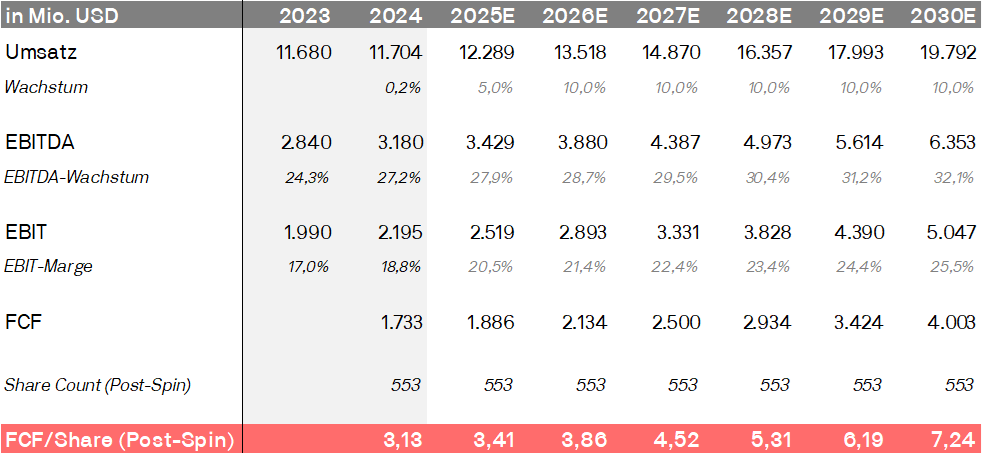
Analysts usually construct valuation comparisons with competitors on the basis of EV/EBITDA. The comparable companies trade at 12.5 times 2025E EBITDA and 11.1 times 2026E EBITDA respectively. Based on the EBITDA forecast for 2025 and 2026 of USD 3.43 billion and USD 3.88 billion respectively, the following values result:
42.9 to 43.1 billion Enterprise Value (EV)
less 4.6 billion USD net debt
= equity value of around 38.4 billion USD or 69.40 USD per share (56.50 CHF)
A price of 69.40 USD corresponds to a Price/FCF (price to free cash flow) ratio of 20.3x, while the mean of the comparison group is 24.8x. Based on our FCF expectation for 2026, the P/FCF multiple reduces to 18.0x. This underlines that the Amrize share, given its dominant market position, promising growth prospects and experienced management, could well experience a marked valuation recovery over the course of the next few years. The implied prices of Amrize at various valuation multiples are shown in the following table:

An alternative way of looking at this is provided by the so-called total return decomposition, in which the individual components of a share's overall return are considered separately. Assuming that Amrize achieves the FCF targets for 2030 in accordance with the table above, the following picture emerges:
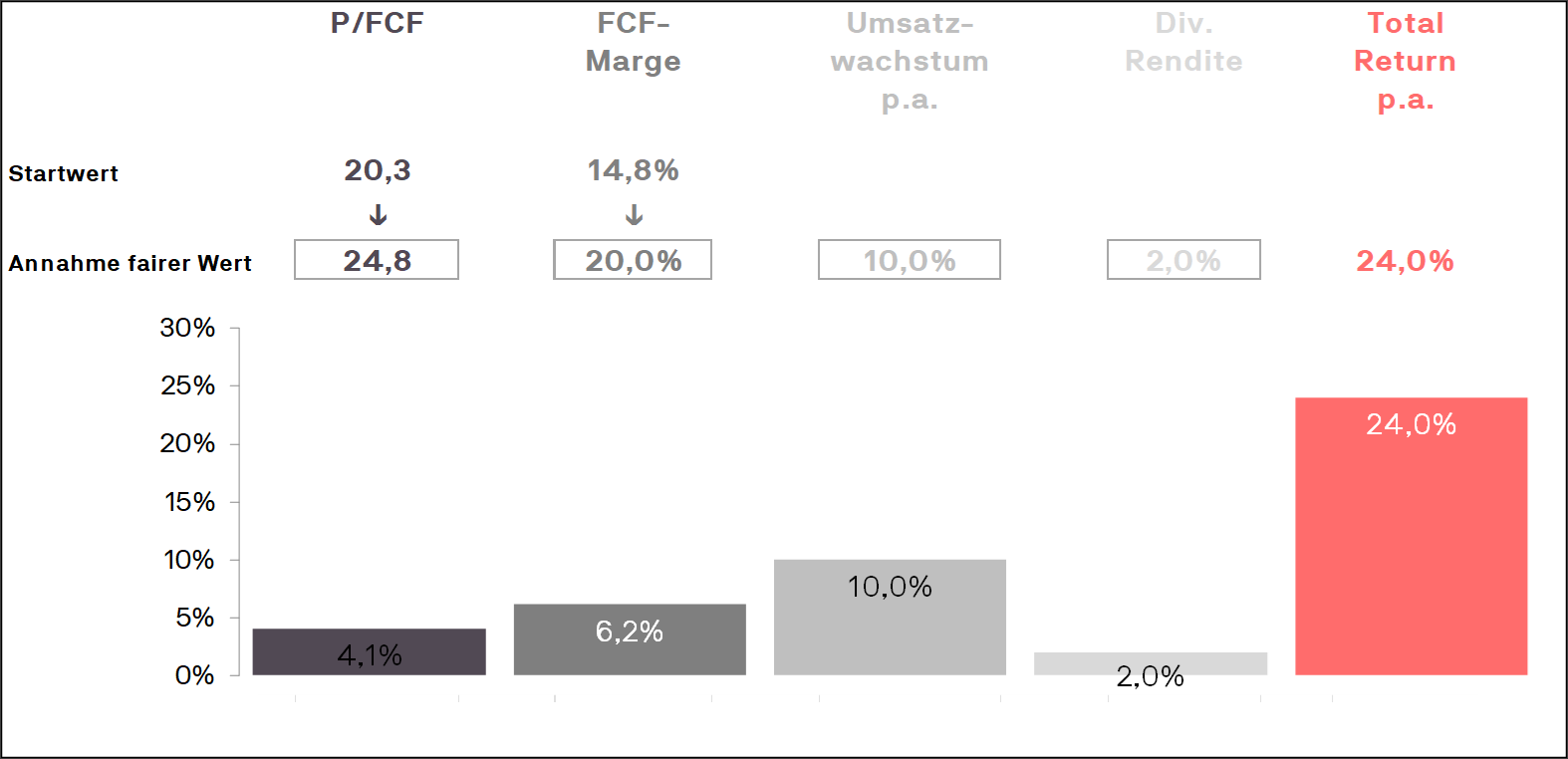
In this consideration, it was assumed that the share experiences a valuation expansion (P/FCF from 20.3x to 24.8x), the FCF margin widens from 14.8% in 2024 to 20% in 2030E, the achieved revenue growth settles at around 10% p.a., and Amrize returns the surplus funds to shareholders in the form of dividends and share buybacks (total yield around 2%).
Immediately after the spin-off, Amrize will have capital contribution reserves in US dollars equivalent to around 1.769 billion Swiss francs. This amount has been adjusted for the nominal share capital of around 5 million francs and enables tax-free dividend distributions under Swiss law. For individuals resident in Switzerland who hold Amrize shares as private assets, distributions from these reserves are exempt both from the federal withholding tax and from income tax. Amrize thus offers an attractive starting position for future returns to shareholders.
The company pursues a conservative capital structure and aims for an investment-grade rating. Capital allocation focuses on investments in the operating business, targeted acquisitions in fragmented markets, as well as the return of capital to shareholders in the form of dividends or share buybacks. However, the use of the capital contribution reserves for dividends can be reduced by future share buybacks. The Board of Directors decides on future distributions within the framework of applicable Swiss law and taking into account Amrize's financial development.
In total, this results in an attractive total return of 24% p.a.. Applying this growth to a share price at the start in mid-2025 of 69.40 USD, would give a price potential of around 200 USD over the coming five years.
Selling pressure after the spin-off?
In a spin-off, shares of the spun-off company (Amrize) are distributed to the shareholders of the parent company Holcim. For each Holcim share, shareholders receive one Amrize share in the form of a so-called stock dividend.
With spin-offs, an initial selling pressure is not unusual, but corresponds to the normal «spin-off mechanics», which have been documented by several studies. However, in the spin-off of Amrize the usual selling pressure is not to be expected, because a) both companies are from the same industry and b) based on the sum-of-the-parts valuation, the market capitalisation of the spin-off should not be smaller than that of Holcim. Rather, Amrize should carry more weight on the scales than Holcim.
Holcim's largest shareholders are Thomas Schmidheiny, followed by UBS, Blackrock and Vanguard. Since Amrize has a dual listing in the USA and Switzerland, and Amrize will remain included in the blue-chip indices SMI (Swiss Market Index) and SLI (Swiss Leaders Index) until at least September 2025, no selling is to be expected from Swiss index funds and index-oriented investors. The Swiss stock exchange operator SIX has announced this as part of a temporary arrangement that applies until the regular index review on 19 September 2025. During this time, the number of stocks in the SMI will be increased from 20 to 21 and in the SLI from 30 to 31. Among US funds, Amrize is likely to be sought after as a high-growth market leader, especially as the company meets the criteria for inclusion in the S&P 500 Index and is likely to become part of the world's most important equity index in the foreseeable future.
Conclusion: many factors point to an attractive spin-off situation
Amrize possesses many of the ingredients for a successful spin-off. With the separation and the clear focus on North America, Amrize is strategically well positioned to benefit from the persistently strong volume of construction and infrastructure investment in the region. As an independent company, Amrize will unlock its full potential and establish itself as a high-growth «pure play». As a listed company, Amrize will pursue a growth-oriented capital allocation, relying on a tailored capital structure oriented towards the US dollar – thereby creating an independent, attractive investment profile. Amrize offers, on the one hand, high, durable barriers to entry with pricing power that protect against competitive and substitution risks, and at the same time operates in a fragmented market structure that offers consolidation potential and steady, sustainable growth through reinvestment opportunities. Jan Jenisch and the management team have an excellent track record, are incentivised accordingly to participate in the success and to act in line with the long-term interests of all shareholders. The targeted medium-term objectives for 2024 to 2028 regarding revenue, margin and FCF development are likely to prove conservative. Should Amrize be obtainable at valuations similar to those of the listed competitors, the shares would be a clear buy. For it can be assumed that the company will show annual free cash flow growth in the high teens by the end of this decade, and this, together with the valuation expansion and capital allocation, could enable an algorithm for annualised returns in the twenties.