Spun off, but not gone to the dogs
Investment opportunities in veterinary medicine spin-offs
Published onReading time 9 minutes
One pharmaceutical company after another is exiting veterinary medicine. Yet this is a structural growth market that is crisis-resistant and, compared with human medicine, exposed to low risks. For investors, the spun-off veterinary medicine divisions offer few, but attractive, investment opportunities.
More than six years ago, the American pharmaceutical group Pfizer spun off its livestock and pet division and floated it on the stock exchange under the name Zoetis. This marked the beginning of a trend that continues to this day: more and more large pharmaceutical groups no longer want veterinary medicine in their portfolios. Following Pfizer, the Swiss pharmaceutical group Novartis also exited the business in 2015, and two years later so did France's Sanofi. The German pharmaceutical firm Boehringer Ingelheim acquired Sanofi's division (Merial), while the American company Eli Lilly initially took over Novartis's veterinary medicine business. After veterinary medicine had been part of Eli Lilly for over 60 years, the company announced two years ago that it intended to focus exclusively on human medicine in future. In September 2018, the veterinary medicine division was then spun off on the stock exchange under the name Elanco. At the end of last year, the German pharmaceutical and chemical company Bayer announced that it too wished to exit veterinary medicine.
Compared with human medicine, veterinary medicine is a niche
Veterinary medicine is divided into two broad categories: medicines for livestock and medicines for pets. Products to prevent diseases and epidemics in livestock represent a market volume of USD 23 billion. Medicines to treat illnesses in our cats and dogs generate revenues of around USD 13 billion. Compared with the annual volume of more than USD 1,200 billion in human medicine, these are modest sums. For the market-leading pharmaceutical groups, which target blockbuster medicines with annual revenues of USD 1 billion, the overall veterinary medicine market — where an annual turnover of just USD 100 million already qualifies as a «blockbuster» — appears rather unattractive. In veterinary medicine, it is much harder for the pharmaceutical giants to achieve economies of scale. Accordingly, at many pharmaceutical conglomerates the veterinary medicine divisions fail to reach critical mass.
Lower risks in veterinary medicine
The research and development of new remedies in human medicine costs a great deal of money, given the extensive testing phases that are heavily regulated by legislators: costs of over USD 1 billion per medicine are the norm, and the outcome following demanding trials as well as the review and approval procedures of state authorities is not certain in every case. In view of the high development costs, pharmaceutical companies are granted patent protection, which is intended to increase the attractiveness of the business. When patent protection expires, medicines suffer significant revenue declines of up to 90% owing to the considerably cheaper generic competition. In addition, the price pressure on medicines from the health insurers is constantly high (rising healthcare costs). From an investor's perspective, investments in pharmaceutical or biotech companies are therefore associated with heightened risks. Disappointments accordingly weigh very heavily on the share price of pharmaceutical companies.
Veterinary medicine may not open up «blockbuster» potential like individual products in human medicine. In return, however, the veterinary medicine business is more stable, more consistent and carries fewer risks. Compared with human medicine, the development costs are considerably more manageable. Moreover, the losses following the expiry of patent protection are considerably lower, as access to the product and the brand play the predominant role here.
Source: Unternehmensdaten, Credit Suisse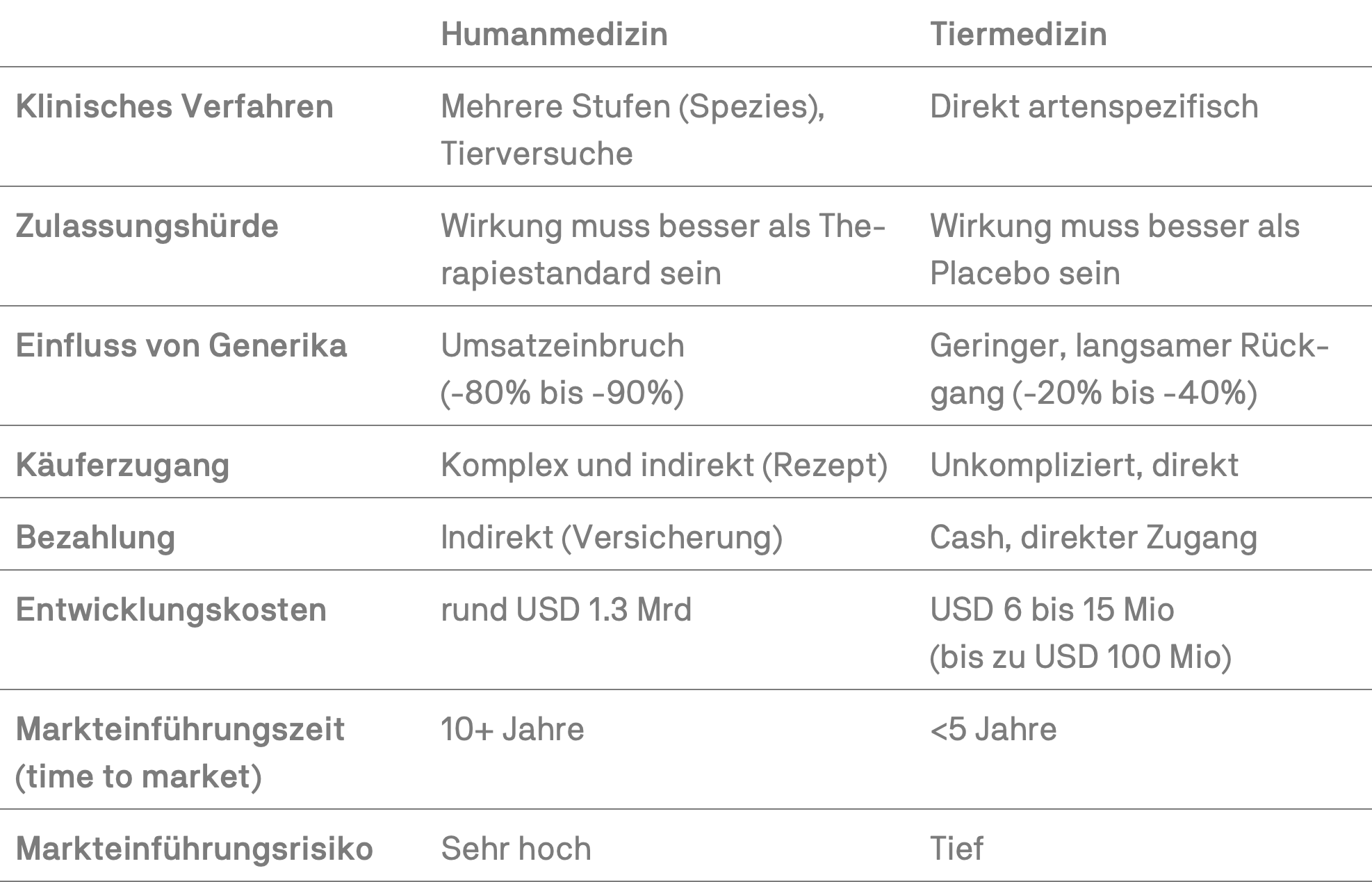
Overall, the veterinary medicine sector exhibits more stable, more predictable and less risky cash flows. At the same time, the potential for disappointment is lower with respect to the product pipeline, generic competition and price pressure from health insurers. That veterinary medicine is an extremely crisis-resistant business was demonstrated over the past decade. Even during the great financial crisis of 2008/2009, the veterinary medicine industry grew by five and three per cent respectively.
Numerous structural drivers
It is not only the crisis-resistant nature of the business that speaks in favour of veterinary medicine. With growth rates of 5% to 6% per annum, the segment is growing at a similar pace to human medicine. Two secular trends are primarily responsible for this: the rising food requirements of the growing world population and the increasing number of pets.
By 2050, the number of people is expected to rise to around 9.5 billion. Given higher incomes, this population is striving for a more protein-rich diet, meaning it will eat more meat and fish, drink more milk and consume more eggs. Despite the emergence of alternative protein sources, agriculture will have to cover the bulk of the higher demand, and do so with limited resources (land, water) and in a sustainable manner. Veterinary medicine plays a central role here, because today an estimated 20% of production capacity is lost due to diseases, epidemics and the premature death of livestock. Accordingly, the health of livestock plays a central role in increasing food productivity: vaccinations and medicines for treating diseases are among the most important tools. At the same time, efforts are being made to develop alternatives to antibiotics in order to avoid resistance and to make food healthier.
The prospects for the pet market are even more promising. Dogs and cats are increasingly being «humanised»: the former guard dog or mouse-catcher has today become a fully-fledged family member. And when family members are unwell, no expense is spared: according to a survey, 76% of pet owners in the USA are prepared to spend whatever is necessary on their pets' health. It is therefore no surprise that Americans' spending at the vet rose by 10.3% per annum from 1959 to 2017, while total consumer spending increased by only 6.7%. Nevertheless, spending at the vet does not even amount to 1% of total spending. The rising pet population, more frequent vet visits, advances in animal diagnostics and regular price increases have made this revenue growth possible. The rising life expectancy of cats and dogs will ensure further growth, as older cats and dogs increasingly develop age-related ailments such as cancer, obesity, osteoarthritis, diabetes, kidney disease or cardiovascular disorders. It is little wonder that healthcare costs rise for older cats (+25%) and dogs (+50%).
In addition to the humanisation of pets and their higher life expectancy, demographic developments are also leading to more and more cats and dogs being kept and cared for as pets. Pets make the lives of many older people more worthwhile, ease their sense of pain and provide them with company. The «empty nest» syndrome likewise leads more and more older people to acquire a pet.
In other countries, rising incomes and rapid urbanisation are added as growth drivers. In China, too, dogs and cats are increasingly making their way to becoming pets and family members: today 17% of Chinese households keep pets, whereas in 2015 the figure was still 10%. By way of comparison: in the USA, 68% of households count cats or dogs as part of the family.
Spin-offs in veterinary medicine offer investment opportunities
The veterinary medicine market is dominated by a few companies: the ten largest companies control over 85% of the global market. After mergers, acquisitions and spin-offs shaped the corporate landscape in recent years, four large veterinary medicine providers now account for the bulk of revenues: Zoetis, Merck and Elanco, as well as Boehringer Ingelheim (privately owned, not listed). Among the four largest players, only Zoetis and Elanco are focused exclusively on veterinary medicine; alongside them there are barely half a dozen listed companies operating in the veterinary medicine sector.
Source: Unternehmensdaten, Credit Suisse; Elanco Umsatz 2018: USD 3.1 Mrd., Bayer Animal Health USD 1.8 Mrd; Zahlen in Mrd USD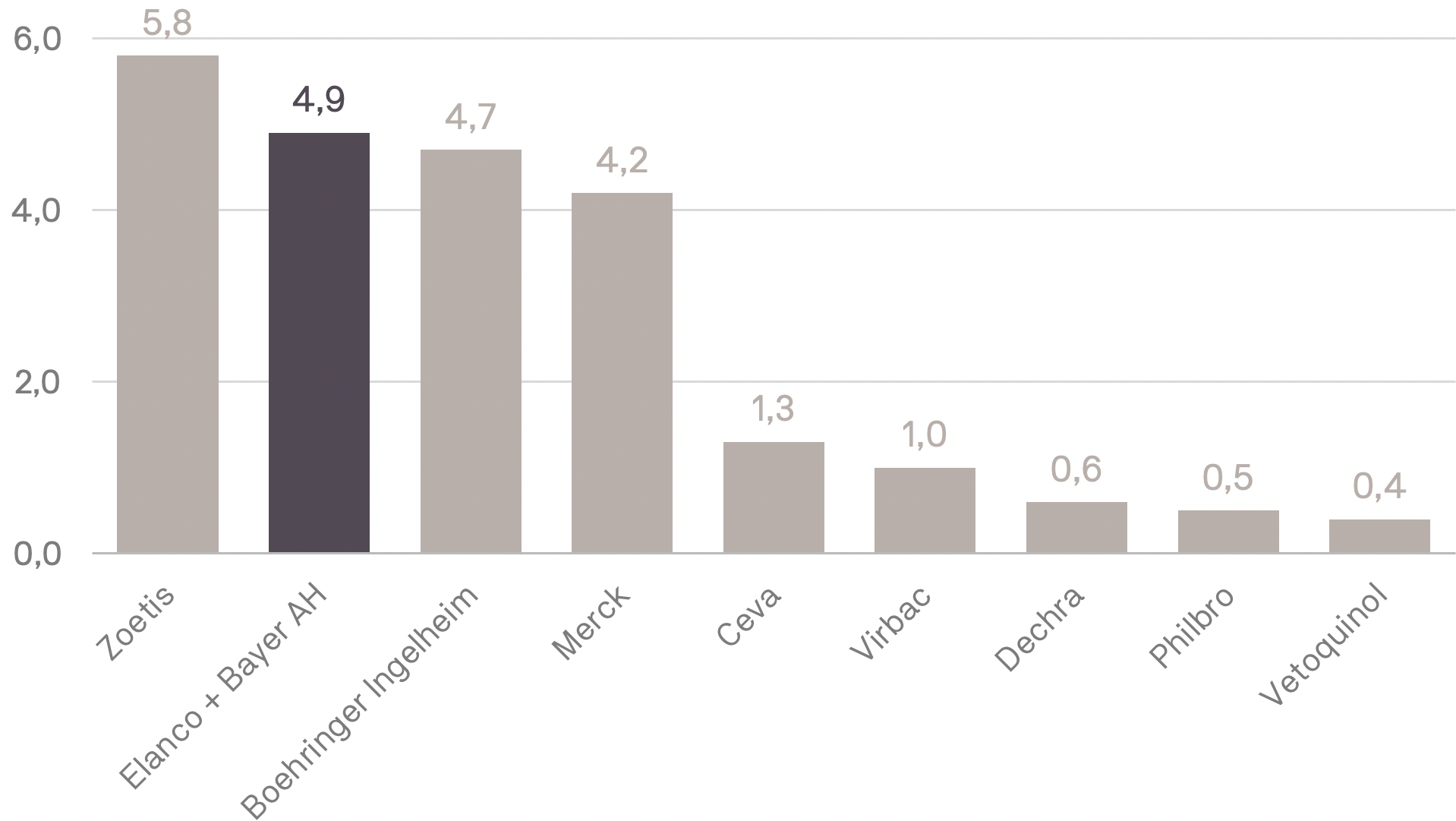
Elanco Animal Health: spin-off momentum and a first-class business
From an investor's perspective, the two spun-off market leaders — and in particular Elanco Animal Health — offer interesting prospects. Historically, spin-offs in the healthcare sector have developed above average and outperformed the overall market by an average of 230% in the first five years after the spin-off. Zoetis, spun off from Pfizer via a split-off in 2013, is no exception in this respect. Since becoming independent in January 2013, Zoetis has risen by 405% including reinvested dividends, compared with 125% for the S&P 500 Index and 133% for the S&P Health Care Sector Index. As is usual with spin-offs, the focus on the core business also brought operational improvement in the case of Zoetis, which led to a re-rating of the share. Market leader Zoetis has thus managed to increase its operating margin from 16% in 2012 to currently 31%. The return on capital employed was likewise more than doubled over the same period, from 16% to currently over 34%.
The successful spin-off of Zoetis is likely to serve as a template for Elanco Animal Health. Similar to the spin-off of Zoetis from Pfizer, just under 20% of the Elanco shares were initially floated on the stock exchange via an IPO. In a second step, the remaining majority in the veterinary medicine business was offered to its own shareholders by means of a share exchange offer. In terms of size, too, Elanco will catch up with market leader Zoetis. In August 2019 it emerged that Bayer's Animal Health business would be taken over for a price of USD 7.6 billion. Following the Monsanto deal (and the glyphosate lawsuits), the ailing German chemical group needs to reduce debt and is thus divesting the very division that generates the highest returns on capital within the group (ROCE at Bayer Animal Health of 38% vs. 4.4% at the Bayer Group).
Source: Unternehmensdaten, Credit Suisse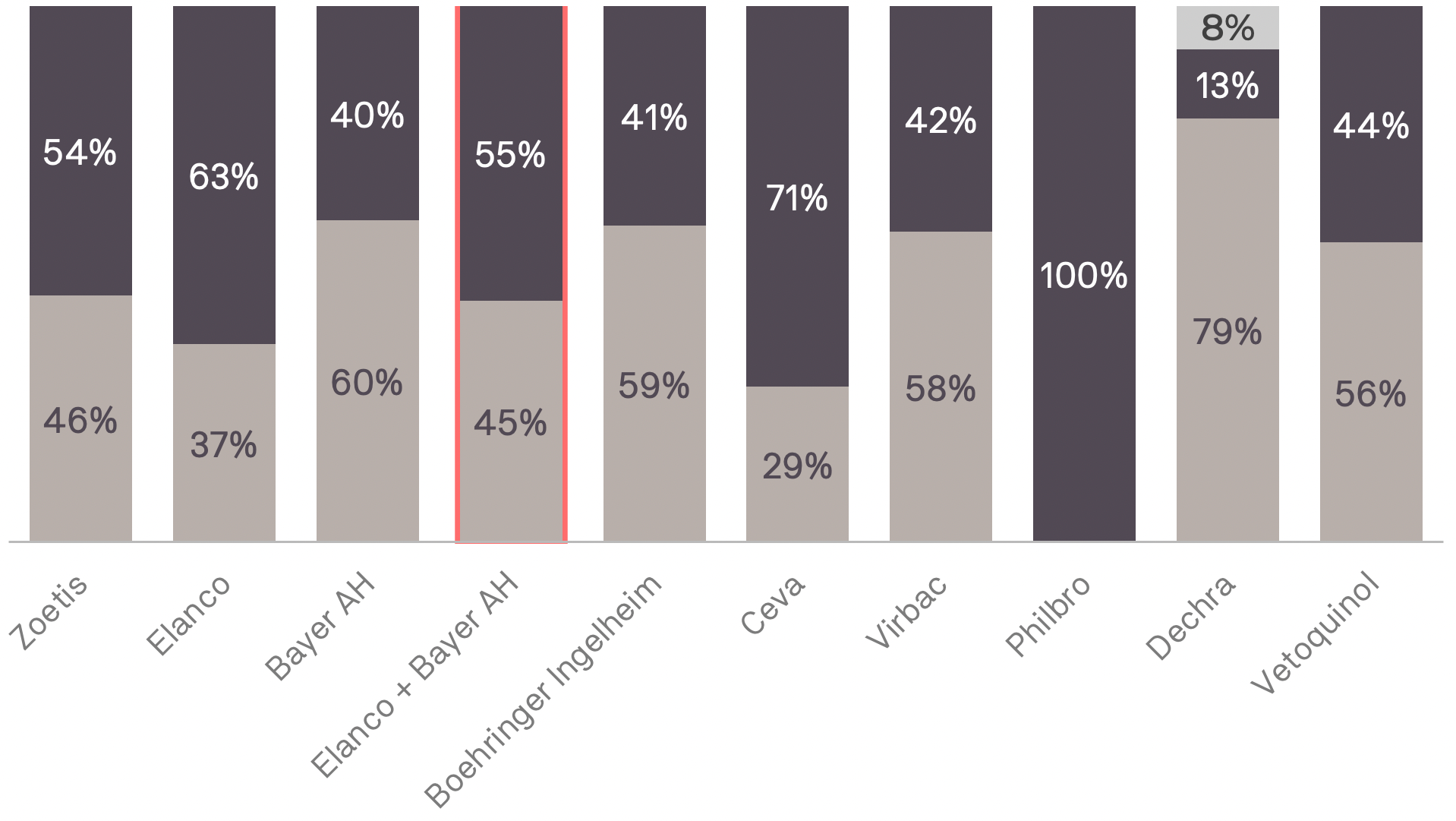
As is not unusual with spin-offs, Elanco's share price has delivered a disappointing performance since the spin-off. In addition, the analysts view the takeover of Bayer's veterinary medicine division excessively critically. The costs of the spin-off and the Bayer takeover will admittedly still weigh on this year's result. Adjusted for these factors, the free cash flow yield stands at an attractive 6%. Market leader Zoetis is currently valued at a free cash flow yield of 3.4%, while the global equity market exhibits a yield of around 4.7%. In view of the structural growth trends, the operational improvements and the attractive valuation, Elanco could develop into a similar success story on the stock exchange as Zoetis.*
*Elanco and Zoetis have not been part of the Keynote portfolios since the end of 2021.